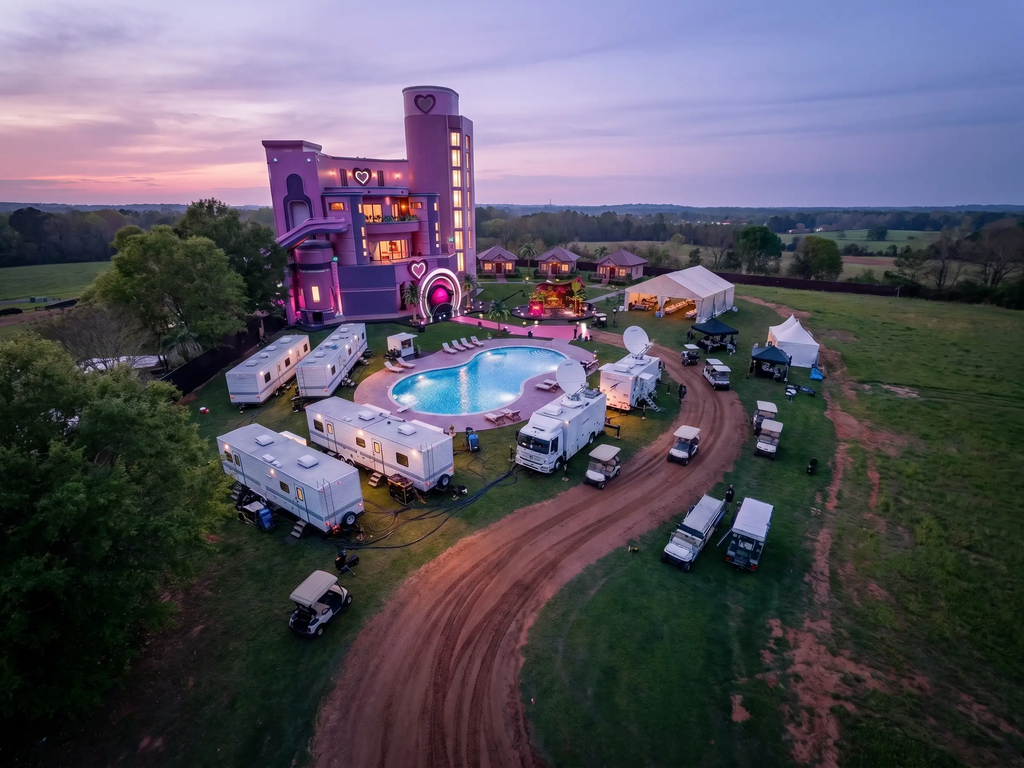
‹The Estate•••
Season 10 — the estate. Pick a light.
moving
The hub is the locked master plate. Every light on it is a region. Choosing one plays the transition clip out to that location and holds on its final frame; the way back is the same clip run in reverse, so the exit is literally the entrance played backwards and cannot drift from it.
“I want a fully navigable environment.” — Cameron, 2026-09-04
15 regions · 15 with transitions · 4 blocking gaps declared · built 2026-09-05T04:55:01.027Z
This shell was built against the graph contract deliberately ahead of the two streams that feed it, so the gaps below are expected, not discovered. They are listed first because a surface that hides its own shortfalls is worse than one that has them.
Every clip currently on this surface was rendered on ONE hard-coded camera bearing. Nothing read cx/cy. So most transitions do not actually depict the region they are labelled with.
Why it matters. Maestro: "The region was a label, not an aim." gazebo/ob-trucks/marquee all show the same pool terrace; pool/tower/main-house all show the same road. Three real compositions across 27 clips. Path 1 worked by accident — the hard-coded bearing happened to point at the pool.
Fix. The aim block now exists in regions.json (filled 2026-09-05). Stream B renders per-region bearings against it. This player then becomes correct without changing a line of it. owner: stream B (abeca841)
maestro task f2f5c5b9, confirmed independently by orchestra reading regions.json
The local graph runs cfg=1, which disables classifier-free guidance and makes the NEGATIVE PROMPT INERT. "people, characters, faces, crowds" in the negative does nothing.
Why it matters. Exclusions were moved into the positive prompt and figures dropped sharply, but they are NOT provably zero at pixel-peep in the far midground. Under processRules.charactersNeverGenerated_2026_09_01 a figure in a Season 10 plate is a REAL DEFECT.
Fix. Stays declared. Never quietly marked solved. Rejected takes are kept in media/REJECTED_*. owner: roadie — declared, not fixed
measured on the local graph; carried on the walkthrough page and now here
The landing held at the end of each transition is the CLIP last frame, not one of Maestro's graded, drift-locked landing compositions.
Why it matters. Stream A ships the drift-locked set. This shell was built before it landed, on purpose — the alternative was not building until everything else finished.
Fix. When stream A publishes, point landing.still at the graded frame and re-run. The player does not change. owner: stream A (maestro 7a5d72eb)
by construction
No video ever established this space. The camera spec for The Treeline is INVENTED, not grounded in a frame anyone has seen.
Why it matters. Cameron's brief demands compositions grounded in real space. This region therefore cannot ship as drift-locked on the same claim as the others.
Fix. Render an exploratory clip toward 0.06,0.782 first, then re-derive the aim. owner: stream B (abeca841) to render; maestro to grade
maestro honesty pass, preserved in HQ s10NavigableWorld_2026_09_04.openRisks.gateHasNoEvidence
Transition clip is 1024x768 (4:3), the exploration-lane aspect.
Why it matters. Cameron, via Maestro stream A: 9:16 and 16:9 — NO 4:3 LANDINGS. These clips predate that ruling; they are the ones that EXIST, which is why the shell uses them.
Fix. Stream B renders 16:9 / 9:16 with first+last conditioning; re-run this script and they swap in. owner: stream B (abeca841)
measured from the ledger row for this clip
The last frame is still moving: tail motion is 64.8% of peak motion (settled means <= 15%). The clip is labelled "low/deep/forward/wide/steady".
Why it matters. Maestro root cause #2: a landing frame must be SETTLED to be held. A smeared final frame cannot serve as a composition. Where the label says decelerating and this still fires, it is direct evidence that PROMPTING a deceleration does not produce one — which is exactly the argument for stream B binding the end plate structurally instead of asking for it in words.
Fix. Bind the end plate twice (settle ramp) via flf-graph.mjs rather than prompting for deceleration. owner: stream B (abeca841)
settleProfile() from comfy/s10/endframe-metrics.mjs, measured on this exact mp4
Transition clip is 1024x768 (4:3), the exploration-lane aspect.
Why it matters. Cameron, via Maestro stream A: 9:16 and 16:9 — NO 4:3 LANDINGS. These clips predate that ruling; they are the ones that EXIST, which is why the shell uses them.
Fix. Stream B renders 16:9 / 9:16 with first+last conditioning; re-run this script and they swap in. owner: stream B (abeca841)
measured from the ledger row for this clip
The last frame is still moving: tail motion is 64.8% of peak motion (settled means <= 15%). The clip is labelled "low/deep/forward/wide/steady".
Why it matters. Maestro root cause #2: a landing frame must be SETTLED to be held. A smeared final frame cannot serve as a composition. Where the label says decelerating and this still fires, it is direct evidence that PROMPTING a deceleration does not produce one — which is exactly the argument for stream B binding the end plate structurally instead of asking for it in words.
Fix. Bind the end plate twice (settle ramp) via flf-graph.mjs rather than prompting for deceleration. owner: stream B (abeca841)
settleProfile() from comfy/s10/endframe-metrics.mjs, measured on this exact mp4
Transition clip is 1024x768 (4:3), the exploration-lane aspect.
Why it matters. Cameron, via Maestro stream A: 9:16 and 16:9 — NO 4:3 LANDINGS. These clips predate that ruling; they are the ones that EXIST, which is why the shell uses them.
Fix. Stream B renders 16:9 / 9:16 with first+last conditioning; re-run this script and they swap in. owner: stream B (abeca841)
measured from the ledger row for this clip
The last frame is still moving: tail motion is 71.1% of peak motion (settled means <= 15%). The clip is labelled "low/deep/forward/wide/steady".
Why it matters. Maestro root cause #2: a landing frame must be SETTLED to be held. A smeared final frame cannot serve as a composition. Where the label says decelerating and this still fires, it is direct evidence that PROMPTING a deceleration does not produce one — which is exactly the argument for stream B binding the end plate structurally instead of asking for it in words.
Fix. Bind the end plate twice (settle ramp) via flf-graph.mjs rather than prompting for deceleration. owner: stream B (abeca841)
settleProfile() from comfy/s10/endframe-metrics.mjs, measured on this exact mp4
Evidence for this region is graded THIN — the space is only weakly established by existing frames.
Why it matters. Same caution as an ABSENT region, lesser degree.
Fix. More coverage toward this centre before the landing is treated as canonical. owner: stream B (abeca841)
maestro evidence grading
Transition clip is 1024x768 (4:3), the exploration-lane aspect.
Why it matters. Cameron, via Maestro stream A: 9:16 and 16:9 — NO 4:3 LANDINGS. These clips predate that ruling; they are the ones that EXIST, which is why the shell uses them.
Fix. Stream B renders 16:9 / 9:16 with first+last conditioning; re-run this script and they swap in. owner: stream B (abeca841)
measured from the ledger row for this clip
The last frame is still moving: tail motion is 74.0% of peak motion (settled means <= 15%). The clip is labelled "low/deep/forward/wide/steady".
Why it matters. Maestro root cause #2: a landing frame must be SETTLED to be held. A smeared final frame cannot serve as a composition. Where the label says decelerating and this still fires, it is direct evidence that PROMPTING a deceleration does not produce one — which is exactly the argument for stream B binding the end plate structurally instead of asking for it in words.
Fix. Bind the end plate twice (settle ramp) via flf-graph.mjs rather than prompting for deceleration. owner: stream B (abeca841)
settleProfile() from comfy/s10/endframe-metrics.mjs, measured on this exact mp4
Transition clip is 1024x768 (4:3), the exploration-lane aspect.
Why it matters. Cameron, via Maestro stream A: 9:16 and 16:9 — NO 4:3 LANDINGS. These clips predate that ruling; they are the ones that EXIST, which is why the shell uses them.
Fix. Stream B renders 16:9 / 9:16 with first+last conditioning; re-run this script and they swap in. owner: stream B (abeca841)
measured from the ledger row for this clip
The last frame is still moving: tail motion is 68.7% of peak motion (settled means <= 15%). The clip is labelled "low/deep/forward/wide/steady".
Why it matters. Maestro root cause #2: a landing frame must be SETTLED to be held. A smeared final frame cannot serve as a composition. Where the label says decelerating and this still fires, it is direct evidence that PROMPTING a deceleration does not produce one — which is exactly the argument for stream B binding the end plate structurally instead of asking for it in words.
Fix. Bind the end plate twice (settle ramp) via flf-graph.mjs rather than prompting for deceleration. owner: stream B (abeca841)
settleProfile() from comfy/s10/endframe-metrics.mjs, measured on this exact mp4
Transition clip is 1024x768 (4:3), the exploration-lane aspect.
Why it matters. Cameron, via Maestro stream A: 9:16 and 16:9 — NO 4:3 LANDINGS. These clips predate that ruling; they are the ones that EXIST, which is why the shell uses them.
Fix. Stream B renders 16:9 / 9:16 with first+last conditioning; re-run this script and they swap in. owner: stream B (abeca841)
measured from the ledger row for this clip
The last frame is still moving: tail motion is 72.8% of peak motion (settled means <= 15%). The clip is labelled "low/deep/forward/wide/steady".
Why it matters. Maestro root cause #2: a landing frame must be SETTLED to be held. A smeared final frame cannot serve as a composition. Where the label says decelerating and this still fires, it is direct evidence that PROMPTING a deceleration does not produce one — which is exactly the argument for stream B binding the end plate structurally instead of asking for it in words.
Fix. Bind the end plate twice (settle ramp) via flf-graph.mjs rather than prompting for deceleration. owner: stream B (abeca841)
settleProfile() from comfy/s10/endframe-metrics.mjs, measured on this exact mp4
Transition clip is 1024x768 (4:3), the exploration-lane aspect.
Why it matters. Cameron, via Maestro stream A: 9:16 and 16:9 — NO 4:3 LANDINGS. These clips predate that ruling; they are the ones that EXIST, which is why the shell uses them.
Fix. Stream B renders 16:9 / 9:16 with first+last conditioning; re-run this script and they swap in. owner: stream B (abeca841)
measured from the ledger row for this clip
The last frame is still moving: tail motion is 71.1% of peak motion (settled means <= 15%). The clip is labelled "low/deep/forward/wide/steady".
Why it matters. Maestro root cause #2: a landing frame must be SETTLED to be held. A smeared final frame cannot serve as a composition. Where the label says decelerating and this still fires, it is direct evidence that PROMPTING a deceleration does not produce one — which is exactly the argument for stream B binding the end plate structurally instead of asking for it in words.
Fix. Bind the end plate twice (settle ramp) via flf-graph.mjs rather than prompting for deceleration. owner: stream B (abeca841)
settleProfile() from comfy/s10/endframe-metrics.mjs, measured on this exact mp4
Transition clip is 1024x768 (4:3), the exploration-lane aspect.
Why it matters. Cameron, via Maestro stream A: 9:16 and 16:9 — NO 4:3 LANDINGS. These clips predate that ruling; they are the ones that EXIST, which is why the shell uses them.
Fix. Stream B renders 16:9 / 9:16 with first+last conditioning; re-run this script and they swap in. owner: stream B (abeca841)
measured from the ledger row for this clip
The last frame is still moving: tail motion is 59.7% of peak motion (settled means <= 15%). The clip is labelled "low/deep/forward/wide/steady".
Why it matters. Maestro root cause #2: a landing frame must be SETTLED to be held. A smeared final frame cannot serve as a composition. Where the label says decelerating and this still fires, it is direct evidence that PROMPTING a deceleration does not produce one — which is exactly the argument for stream B binding the end plate structurally instead of asking for it in words.
Fix. Bind the end plate twice (settle ramp) via flf-graph.mjs rather than prompting for deceleration. owner: stream B (abeca841)
settleProfile() from comfy/s10/endframe-metrics.mjs, measured on this exact mp4
Evidence for this region is graded THIN — the space is only weakly established by existing frames.
Why it matters. Same caution as an ABSENT region, lesser degree.
Fix. More coverage toward this centre before the landing is treated as canonical. owner: stream B (abeca841)
maestro evidence grading
Transition clip is 1024x768 (4:3), the exploration-lane aspect.
Why it matters. Cameron, via Maestro stream A: 9:16 and 16:9 — NO 4:3 LANDINGS. These clips predate that ruling; they are the ones that EXIST, which is why the shell uses them.
Fix. Stream B renders 16:9 / 9:16 with first+last conditioning; re-run this script and they swap in. owner: stream B (abeca841)
measured from the ledger row for this clip
The last frame is still moving: tail motion is 59.7% of peak motion (settled means <= 15%). The clip is labelled "low/deep/forward/wide/steady".
Why it matters. Maestro root cause #2: a landing frame must be SETTLED to be held. A smeared final frame cannot serve as a composition. Where the label says decelerating and this still fires, it is direct evidence that PROMPTING a deceleration does not produce one — which is exactly the argument for stream B binding the end plate structurally instead of asking for it in words.
Fix. Bind the end plate twice (settle ramp) via flf-graph.mjs rather than prompting for deceleration. owner: stream B (abeca841)
settleProfile() from comfy/s10/endframe-metrics.mjs, measured on this exact mp4
Transition clip is 1024x768 (4:3), the exploration-lane aspect.
Why it matters. Cameron, via Maestro stream A: 9:16 and 16:9 — NO 4:3 LANDINGS. These clips predate that ruling; they are the ones that EXIST, which is why the shell uses them.
Fix. Stream B renders 16:9 / 9:16 with first+last conditioning; re-run this script and they swap in. owner: stream B (abeca841)
measured from the ledger row for this clip
The last frame is still moving: tail motion is 71.1% of peak motion (settled means <= 15%). The clip is labelled "low/deep/forward/wide/steady".
Why it matters. Maestro root cause #2: a landing frame must be SETTLED to be held. A smeared final frame cannot serve as a composition. Where the label says decelerating and this still fires, it is direct evidence that PROMPTING a deceleration does not produce one — which is exactly the argument for stream B binding the end plate structurally instead of asking for it in words.
Fix. Bind the end plate twice (settle ramp) via flf-graph.mjs rather than prompting for deceleration. owner: stream B (abeca841)
settleProfile() from comfy/s10/endframe-metrics.mjs, measured on this exact mp4
The two source sets disagree about where this camera goes.
Why it matters. SET1 (the shipped sheet Cameron has seen) and SET2 (v2 prompts, never proven rendered) carry different values. regions.json keeps BOTH rather than picking a winner.
Fix. A human picks, or SET2 is rendered and graded so there is evidence to pick with. owner: maestro (stream A) — it is a composition call, not an engineering one
regions.json _aim.policy, written by the stream B seat
Transition clip is 1024x768 (4:3), the exploration-lane aspect.
Why it matters. Cameron, via Maestro stream A: 9:16 and 16:9 — NO 4:3 LANDINGS. These clips predate that ruling; they are the ones that EXIST, which is why the shell uses them.
Fix. Stream B renders 16:9 / 9:16 with first+last conditioning; re-run this script and they swap in. owner: stream B (abeca841)
measured from the ledger row for this clip
The last frame is still moving: tail motion is 59.7% of peak motion (settled means <= 15%). The clip is labelled "low/deep/forward/wide/steady".
Why it matters. Maestro root cause #2: a landing frame must be SETTLED to be held. A smeared final frame cannot serve as a composition. Where the label says decelerating and this still fires, it is direct evidence that PROMPTING a deceleration does not produce one — which is exactly the argument for stream B binding the end plate structurally instead of asking for it in words.
Fix. Bind the end plate twice (settle ramp) via flf-graph.mjs rather than prompting for deceleration. owner: stream B (abeca841)
settleProfile() from comfy/s10/endframe-metrics.mjs, measured on this exact mp4
The two source sets disagree about where this camera goes.
Why it matters. SET1 (the shipped sheet Cameron has seen) and SET2 (v2 prompts, never proven rendered) carry different values. regions.json keeps BOTH rather than picking a winner.
Fix. A human picks, or SET2 is rendered and graded so there is evidence to pick with. owner: maestro (stream A) — it is a composition call, not an engineering one
regions.json _aim.policy, written by the stream B seat
Transition clip is 1024x768 (4:3), the exploration-lane aspect.
Why it matters. Cameron, via Maestro stream A: 9:16 and 16:9 — NO 4:3 LANDINGS. These clips predate that ruling; they are the ones that EXIST, which is why the shell uses them.
Fix. Stream B renders 16:9 / 9:16 with first+last conditioning; re-run this script and they swap in. owner: stream B (abeca841)
measured from the ledger row for this clip
The last frame is still moving: tail motion is 83.3% of peak motion (settled means <= 15%). The clip is labelled "low/deep/forward/wide/steady".
Why it matters. Maestro root cause #2: a landing frame must be SETTLED to be held. A smeared final frame cannot serve as a composition. Where the label says decelerating and this still fires, it is direct evidence that PROMPTING a deceleration does not produce one — which is exactly the argument for stream B binding the end plate structurally instead of asking for it in words.
Fix. Bind the end plate twice (settle ramp) via flf-graph.mjs rather than prompting for deceleration. owner: stream B (abeca841)
settleProfile() from comfy/s10/endframe-metrics.mjs, measured on this exact mp4
The two source sets disagree about where this camera goes.
Why it matters. SET1 (the shipped sheet Cameron has seen) and SET2 (v2 prompts, never proven rendered) carry different values. regions.json keeps BOTH rather than picking a winner.
Fix. A human picks, or SET2 is rendered and graded so there is evidence to pick with. owner: maestro (stream A) — it is a composition call, not an engineering one
regions.json _aim.policy, written by the stream B seat
Transition clip is 1024x768 (4:3), the exploration-lane aspect.
Why it matters. Cameron, via Maestro stream A: 9:16 and 16:9 — NO 4:3 LANDINGS. These clips predate that ruling; they are the ones that EXIST, which is why the shell uses them.
Fix. Stream B renders 16:9 / 9:16 with first+last conditioning; re-run this script and they swap in. owner: stream B (abeca841)
measured from the ledger row for this clip
The last frame is still moving: tail motion is 69.5% of peak motion (settled means <= 15%). The clip is labelled "low/deep/forward/wide/steady".
Why it matters. Maestro root cause #2: a landing frame must be SETTLED to be held. A smeared final frame cannot serve as a composition. Where the label says decelerating and this still fires, it is direct evidence that PROMPTING a deceleration does not produce one — which is exactly the argument for stream B binding the end plate structurally instead of asking for it in words.
Fix. Bind the end plate twice (settle ramp) via flf-graph.mjs rather than prompting for deceleration. owner: stream B (abeca841)
settleProfile() from comfy/s10/endframe-metrics.mjs, measured on this exact mp4
The two source sets disagree about where this camera goes.
Why it matters. SET1 (the shipped sheet Cameron has seen) and SET2 (v2 prompts, never proven rendered) carry different values. regions.json keeps BOTH rather than picking a winner.
Fix. A human picks, or SET2 is rendered and graded so there is evidence to pick with. owner: maestro (stream A) — it is a composition call, not an engineering one
regions.json _aim.policy, written by the stream B seat
Transition clip is 1024x768 (4:3), the exploration-lane aspect.
Why it matters. Cameron, via Maestro stream A: 9:16 and 16:9 — NO 4:3 LANDINGS. These clips predate that ruling; they are the ones that EXIST, which is why the shell uses them.
Fix. Stream B renders 16:9 / 9:16 with first+last conditioning; re-run this script and they swap in. owner: stream B (abeca841)
measured from the ledger row for this clip
The last frame is still moving: tail motion is 29.5% of peak motion (settled means <= 15%). The clip is labelled "low/deep/forward/wide/steady".
Why it matters. Maestro root cause #2: a landing frame must be SETTLED to be held. A smeared final frame cannot serve as a composition. Where the label says decelerating and this still fires, it is direct evidence that PROMPTING a deceleration does not produce one — which is exactly the argument for stream B binding the end plate structurally instead of asking for it in words.
Fix. Bind the end plate twice (settle ramp) via flf-graph.mjs rather than prompting for deceleration. owner: stream B (abeca841)
settleProfile() from comfy/s10/endframe-metrics.mjs, measured on this exact mp4
The two source sets disagree about where this camera goes.
Why it matters. SET1 (the shipped sheet Cameron has seen) and SET2 (v2 prompts, never proven rendered) carry different values. regions.json keeps BOTH rather than picking a winner.
Fix. A human picks, or SET2 is rendered and graded so there is evidence to pick with. owner: maestro (stream A) — it is a composition call, not an engineering one
regions.json _aim.policy, written by the stream B seat
Transition clip is 1024x768 (4:3), the exploration-lane aspect.
Why it matters. Cameron, via Maestro stream A: 9:16 and 16:9 — NO 4:3 LANDINGS. These clips predate that ruling; they are the ones that EXIST, which is why the shell uses them.
Fix. Stream B renders 16:9 / 9:16 with first+last conditioning; re-run this script and they swap in. owner: stream B (abeca841)
measured from the ledger row for this clip
The last frame is still moving: tail motion is 60.6% of peak motion (settled means <= 15%). The clip is labelled "low/deep/forward/wide/steady".
Why it matters. Maestro root cause #2: a landing frame must be SETTLED to be held. A smeared final frame cannot serve as a composition. Where the label says decelerating and this still fires, it is direct evidence that PROMPTING a deceleration does not produce one — which is exactly the argument for stream B binding the end plate structurally instead of asking for it in words.
Fix. Bind the end plate twice (settle ramp) via flf-graph.mjs rather than prompting for deceleration. owner: stream B (abeca841)
settleProfile() from comfy/s10/endframe-metrics.mjs, measured on this exact mp4
Landings have no onward hotspots. Navigation is hub-and-spoke only: hub to region, region to hub.
Why it matters. The contract says hub-and-spoke first, region-to-region later. The onward[] field exists in the graph and is EMPTY on every node. It is empty rather than populated with invented adjacency.
Fix. Region-to-region needs clips that start at one landing and end at another. None exist yet. owner: unscheduled — needs a Cameron call on whether it is worth the renders
by construction; assertOnwardHonest enforces that it stays empty rather than faked
The hub still is the source plate file on disk (lb_s10_plate_1024x768.png), not a frame pulled out of a clip.
Why it matters. MEASURED 2026-09-05: the 27 clip first-frames have 20+ DISTINCT md5s despite all citing the same sourcePlateId. They are per-render VAE reconstructions extracted with ffmpeg at frame 0, not copies of the plate. Had the hub been built from one of them, every return would land on a slightly different reconstruction of the hub and the "continuous by construction" claim would be false at the pixel level while looking fine.
Fix. None needed. Recorded because it is the kind of thing that gets re-derived expensively. owner: closed
md5sum over .fermata-state/s10-explore/frames/*.first.jpg
Camera line reads height · lens · bearing · distance from centre. Numbers authored by Maestro; transcribed into regions.json by the stream B seat; read here, never written.
| # | Region | Treatment | Centre | Camera | Evidence | Clip | Tail settled |
|---|---|---|---|---|---|---|---|
| 1 | The Tower | Tower Rise | 0.3,0.135 | 1.4m · 24mm · 40° · 22m | STRONG | seq 1 p1 | no 65% |
| 2 | Main House | The Approach | 0.13,0.262 | 1.6m · 28mm · 315° · 34m | STRONG | seq 2 p1 | no 65% |
| 3 | Heart Arch | The Threshold | 0.32,0.378 | 1.5m · 35mm · 330° · 9m | STRONG | seq 3 p1 | no 71% |
| 4 | The Gazebo | The Cabana | 0.645,0.372 | 1.5m · 35mm · 250° · 14m | THIN | seq 5 p1 | no 74% |
| 5 | Bungalows | The Row | 0.56,0.338 | 1.5m · 35mm · 210° · 20m | STRONG | seq 6 p1 | no 69% |
| 6 | The Pool | Water Level | 0.4,0.47 | 0.5m · 24mm · 315° · 4m | STRONG | seq 25 p1 | no 73% |
| 7 | Sun Deck | The Loungers | 0.33,0.436 | 1.1m · 35mm · 40° · 10m | MODERATE | seq 14 p1 | no 71% |
| 8 | The Marquee | The Open Side | 0.89,0.358 | 1.6m · 28mm · 280° · 18m | STRONG | seq 15 p1 | no 60% |
| 9 | The Blacks | The Dark Row | 0.952,0.416 | 1.5m · 35mm · 250° · 12m | THIN | seq 16 p1 | no 60% |
| 10 | Trailers | The Row | 0.14,0.56 | 1.4m · 28mm · 20° · 12m | STRONG | seq 17 p1 | no 71% |
| 11 | OB Trucks | The Dishes | 0.68,0.5 | 1.5m · 35mm · 300° · 14m | MODERATE unresolved | seq 18 p1 | no 60% |
| 12 | Motor Pool | The Carts | 0.84,0.582 | 1.3m · 35mm · 320° · 12m | MODERATE unresolved | seq 31 p1 | no 83% |
| 13 | The Long Road | The Return | 0.46,0.82 | 1.5m · 28mm · 350° · 60m | STRONG unresolved | seq 32 p1 | no 70% |
| 14 | The Gate | The Treeline | 0.06,0.782 | 1.5m · 35mm · 200° · 15m | ABSENT unresolved | seq 33 p1 | no 30% |
| 15 | Piatrice casting truck | The Uplink | 0.585,0.575 | 1.4m · 35mm · 60° · 10m | MODERATE unresolved | seq 34 p1 | no 61% |